


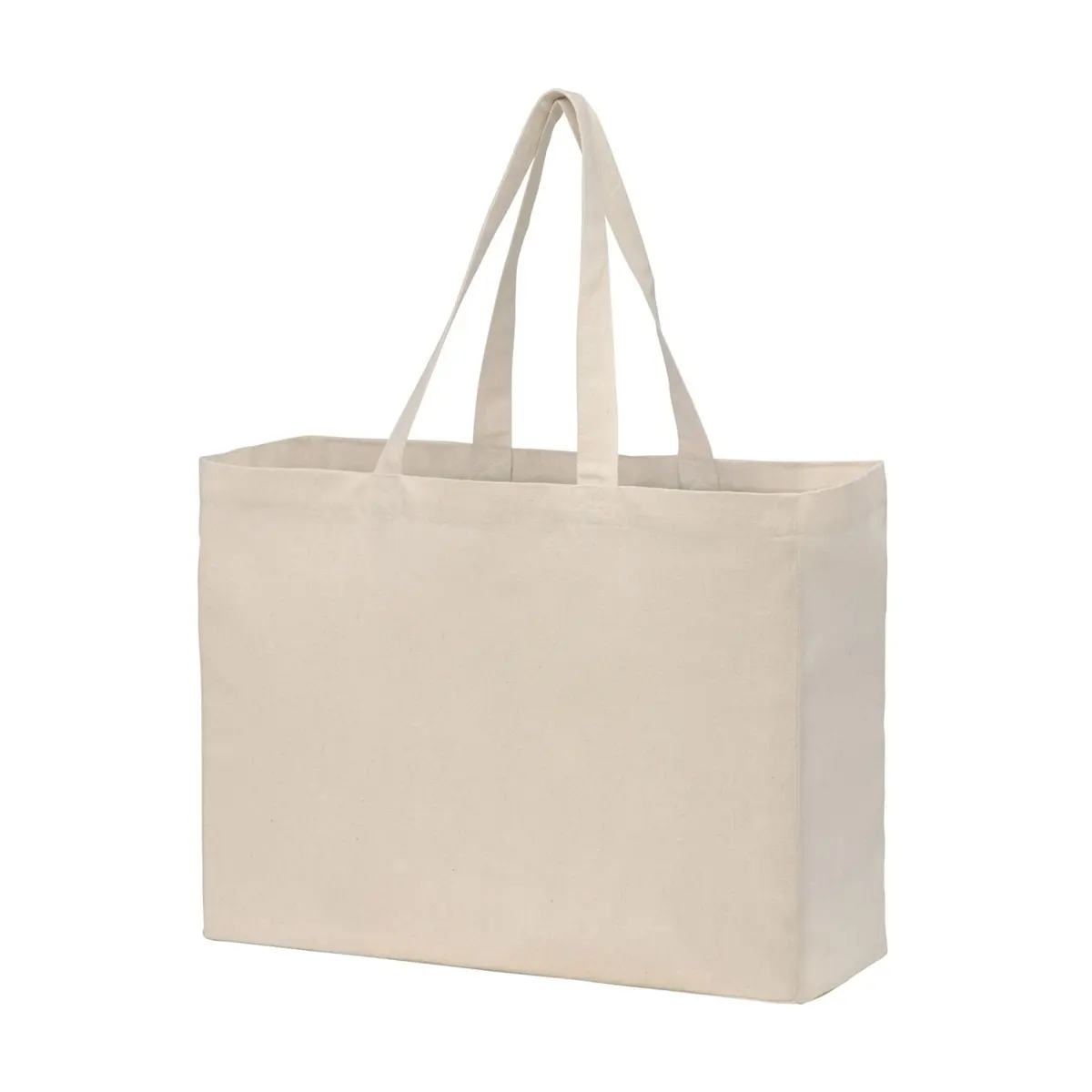
Tote Bag GSM Explained: A UAE Buyer’s Guide
What GSM means on a tote-bag specification
GSM means grams per square metre. In a tote-bag brief, it states the mass of a fabric over a defined area, expressed as fabric mass divided by fabric area. It is useful for describing fabric consistently, but is only one construction field. It does not directly state fabric thickness, thread count, the weight of the finished bag or the load the bag can carry. Keeping that distinction clear helps buyers in the UAE ask for an accurate quotation and compare supplier responses fairly.
Why GSM is not a durability or capacity claim
Fabric mass per unit area can inform a conversation about a tote bag’s feel and construction, but a number alone cannot guarantee durability. Fibre type, yarn characteristics, weave, finishing, handle attachment, seam construction and the design of the bag all matter. A tote that looks similar in a photograph may have important differences in these elements, even where its GSM declaration appears comparable.
Thickness and GSM should also be kept separate. A fabric can feel or appear different because of its weave, fibre, surface finish or compression, while GSM is a mass-per-area measurement. Thread count is a separate construction description too. Asking for each characteristic in its own field makes an RFQ more precise and reduces the risk that a broad phrase such as “heavy tote” is interpreted differently by different parties.
Write an RFQ that makes GSM comparable
An effective tote-bag RFQ begins by identifying the product configuration, then records GSM as one fabric field within it. State the bag dimensions, whether there is a gusset, handle style and length, required print placement, colour reference and any closure or internal feature. Describe the fabric by fibre and weave separately from its GSM. This lets a supplier quote the same product rather than a superficially similar alternative.
Ask the supplier to state the basis for the GSM declaration. For example, clarify whether the stated figure relates to the base fabric before a coating, lining or other added layer. If the item includes any of those elements, name them individually and ask how they are being accounted for. A figure without its basis can be difficult to compare, especially where the quoted item has more than one textile component.
The request should also identify the colour, finish and print requirements because these can affect what is being reviewed. Do not assume a fabric description carries every other feature with it. Record the artwork version, printing method requested where relevant, and whether the bag is to remain unlined or include a named lining. Clear written fields help avoid a later mismatch between a quotation, a physical sample and a repeat order.
Rather than imposing an unexplained figure, invite the supplier to confirm the proposed GSM and declaration basis against the agreed configuration. If a tolerance is needed for purchasing control, agree it in writing with the supplier for that project; do not leave it implied. The same applies to any method or documentation used to support the declaration. An agreed approach is more valuable than two parties using the same term while meaning different things.
Use samples to confirm the actual construction
A physical sample is the practical checkpoint for a specified tote bag. Label it clearly with the enquiry or project reference, configuration and revision status. The label should make it possible to distinguish an early concept from the version approved for an order. Keeping a photograph of the identified sample alongside the written specification gives all parties a useful point of reference without treating an unlabelled item as an exact standard.
Review the actual contents and construction, not GSM in isolation. Confirm dimensions, gusset arrangement, handle placement and attachment, stitch appearance, fabric texture, lining or coating where applicable, colour and the agreed print details. If the tote includes more than one fabric, record which component each description applies to. This turns sample approval into a check of the whole selected configuration.
Compare quotations on a like-for-like basis
Place competing quotations beside the same RFQ and check whether every response addresses the same stated configuration. Begin with fibre, weave, GSM declaration basis, dimensions, handles and gusset; then review finish, lining, coating, print and closures. A response that omits one of these fields may not be directly comparable, even if the quoted product name sounds familiar. Ask for clarification before evaluating how the offers differ.
Category pages can help frame the initial brief, provided the buyer still specifies the chosen construction. Green Bags UAE’s cotton bags range, canvas bags selection and ready-stock canvas bags offer useful starting points for identifying a bag style. The final quotation should nevertheless confirm the selected fabric and construction rather than relying on a category label alone.
Watch for terms that combine different product elements into one broad figure. If a quote refers to a coated, lined or composite item, ask whether its stated GSM relates to the base fabric or another basis. If the answer cannot be connected to the actual construction, request a clearer description. The purpose is not to prescribe a single format for every tote, but to make the declared figure meaningful for the product being bought.
Control repeat orders with the approved reference
Repeat orders are easier to manage when GSM is retained as part of a complete reference, not copied into an email on its own. Begin a repeat-order enquiry by naming the approved configuration and attaching the current specification. Ask the supplier to reconfirm the fabric description, declaration basis and all construction features before the quote is accepted. This is particularly useful if artwork, colour or bag details have changed since the original order.
If a substitute fabric, finish or component is proposed, treat it as a change rather than assuming it is equivalent because the GSM is similar. Record what differs, why it differs and whether the approved sample reference remains applicable. A new or revised identified sample may be needed for the changed configuration. This disciplined approach protects the comparison process without making claims that one number can prove overall performance.
Request a clear tote-bag quotation
Green Bags UAE has been based in Dubai since 2006, with a warehouse in Al Qusais Industrial Area 5. Minimum orders start from 50 pieces. For a free quote, share your selected tote configuration, including the fabric description and GSM declaration basis, by calling +971 4 370 5277 or emailing enquiry@greenbagsuae.com.
Ready to document your selected configuration? Send a tote-bag enquiry to Green Bags UAE with your dimensions, construction details, artwork reference and the GSM basis you want confirmed.
Frequently asked questions
What does GSM mean for a tote bag?
GSM means grams per square metre. It records the mass of the fabric across a defined area and is useful for describing a textile consistently. It is not the finished bag weight, thickness, thread count, carrying capacity or a direct guarantee of durability. Review it alongside fibre, weave, finish and complete construction.
Does a higher GSM always mean a stronger tote bag?
No. GSM is one fabric measurement, not a complete strength or durability assessment. Fibre, yarns, weave, finish, handle attachment, seams and overall design can all influence the finished tote. Compare the same defined construction and ask suppliers to explain the declaration basis, rather than treating a higher number as a standalone answer.
Should coatings and linings be included in the GSM figure?
The important point is to clarify the basis of the declaration. Ask whether the stated GSM refers to the base fabric before any coating or lining, and identify added layers separately. This makes quotations easier to compare and prevents a figure for one construction from being treated as equivalent to another.
How should I specify GSM in a tote-bag RFQ?
Record GSM beside a separate fabric description covering fibre and weave, then ask the supplier to confirm the basis for the figure. Include dimensions, gusset, handles, finish, lining or coating, colour and print details. If a tolerance is required, agree it in writing for the selected configuration rather than assuming one.
What should be retained for a repeat tote-bag order?
Keep the version-controlled specification, approved-sample identifier, artwork reference and the supplier’s fabric declaration basis. The record should distinguish fabric GSM from the completed tote description and note every construction feature. On a repeat enquiry, ask for those details to be reconfirmed and document any proposed substitution as a change.
